

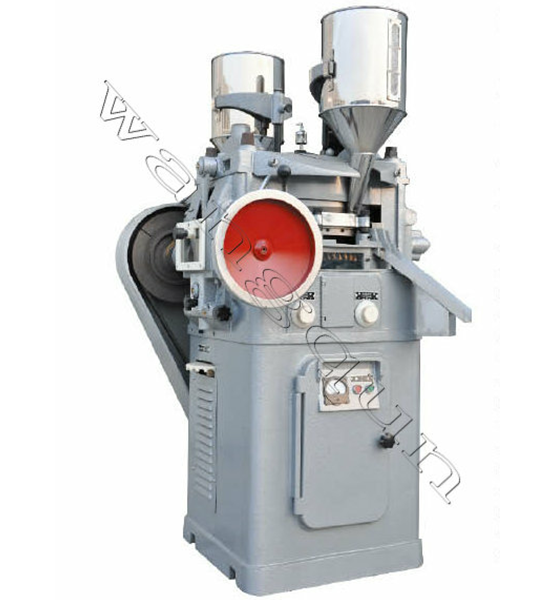
Best Rotary Tablet Press for Nutraceutical Production
Industry Background and Market Demand
The global nutraceutical industry has experienced steady growth, driven by increasing consumer demand for dietary supplements, functional foods, and fortified products. According to market research, the sector is projected to exceed $700 billion by 2030, with tablets remaining a dominant dosage form due to their convenience, stability, and precise dosing.
Rotary tablet presses are critical in nutraceutical manufacturing, offering high-speed production, consistent tablet quality, and flexibility in formulation. Unlike single-punch presses, rotary models utilize multiple stations to compress powder blends into tablets efficiently. The demand for advanced rotary presses has risen as manufacturers seek equipment that complies with stringent regulatory standards (e.g., FDA, cGMP) while accommodating diverse formulations—from multivitamins to herbal extracts.
Core Concepts and Key Technologies
A rotary tablet press operates by feeding powder into dies, where upper and lower punches compress the material under controlled force. The process involves several stages:
1. Feeding System – Ensures uniform powder distribution into dies.
2. Compression Zone – Applies pre-compression and main compression to form tablets.
3. Ejection System – Removes finished tablets without damage.
Key technologies include:
- Turret Design: Multi-station turrets (16–75 stations) enable high output (up to 1M tablets/hour).
- Force Control: Hydraulic or servo-driven systems adjust compression force for brittle or elastic formulations.
- Tooling Standards: Eurostandard (EU) or TSM (US) tooling ensures compatibility with industry norms.
Product Structure and Performance
A high-performance rotary press for nutraceuticals typically includes:
- Frame and Turret: Robust cast iron or stainless steel construction minimizes vibration and wear.
- Punch and Die Sets: Hardened steel (e.g., D3, DIN 1.2379) resists abrasion from abrasive excipients like magnesium stearate.
- Control System: PLC-based interfaces with real-time monitoring of weight, hardness, and thickness.
Advanced models feature:
- Dedusting Mechanisms: Reduce particulate contamination.
- Quick-Changeover Systems: Minimize downtime for format adjustments.
Critical Factors Affecting Quality
1. Tooling Precision: Misaligned punches cause capping or sticking.
2. Compression Force Consistency: Variations lead to weight fluctuations.
3. Material Flow Properties: Poorly flowing blends result in uneven die filling.
Supplier Selection Criteria
When evaluating rotary press suppliers, consider:
- Regulatory Compliance: Equipment must meet cGMP and FDA 21 CFR Part 11 (for digital systems).
- After-Sales Support: Availability of spare parts and technician training.
- Customization Options: Ability to handle niche formulations (e.g., probiotics with low heat tolerance).
Common Challenges and Solutions
1. Sticking/Lamination – Caused by excessive moisture or inadequate lubrication. Solution: Optimize binder concentration or use anti-adherent coatings.
2. Weight Variation – Often due to inconsistent feed density. Solution: Install force feeders for cohesive powders.
3. Cross-Contamination – Risk in multi-product facilities. Solution: Modular designs with wash-in-place (WIP) capabilities.
Applications and Case Studies
A mid-sized supplement manufacturer reduced tablet defects by 30% after switching to a servo-driven rotary press with closed-loop force control. Another producer of herbal tablets achieved a 20% higher output by upgrading to a 55-station press with automated weight adjustment.
Trends and Future Developments
1. Industry 4.0 Integration: IoT-enabled presses provide predictive maintenance alerts.
2. Sustainable Manufacturing: Energy-efficient drives and reduced material waste.
3. Flexible Formats: Machines capable of producing layered or coated tablets for combination supplements.
FAQ
Q: How does a rotary press differ from a single-punch press?
A: Rotary presses use multiple dies for continuous production, while single-punch models compress one tablet at a time, limiting throughput.
Q: What maintenance is required for long-term performance?
A: Regular lubrication, punch inspection, and calibration of force sensors are essential.
Q: Can rotary presses handle nutraceuticals with high API concentrations?
A: Yes, but tooling must be hardened to withstand abrasive actives like silica or minerals.
The selection of a rotary tablet press hinges on production volume, formulation complexity, and regulatory requirements. Investing in a robust, adaptable machine ensures scalability and compliance in the evolving nutraceutical landscape.
Copyright © 2025 Changzhou Wangqun Pharmaceutical Machinery Co., Ltd. Все права защищены.
Карта сайтаЭтот веб-сайт использует файлы cookie, чтобы обеспечить вам максимально эффективное использование нашего веб-сайта.
 English
 Español
 Français
 العربية



 телефон
Комментарий
(0)